| |
travel
writing: nepal
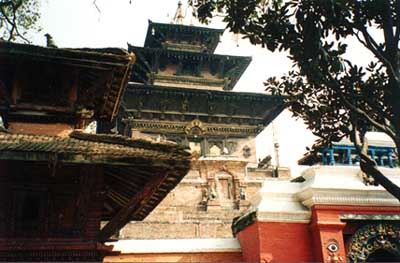
Never saw a Yak, let alone a Yeti
  leaving
a trail of sweaters behind us as we peeling them off, panting leaving
a trail of sweaters behind us as we peeling them off, panting |
[Click
on the links to see pictures]
We didn't do our research. I figured, "Kathmandu:
exotic, but, Himalayas: freezing." I imagine that temperatures do
drop, especially at night, on the trail north of Base Camp on the
trek up Mt. Everest, but down in Kathmandu, which I only later (2
days before the trip was over) read about in the guide book, days
are pretty balmy due to the fact that Kathmandu is actually south
of New Delhi. (This is a lesson in the value of reading, and illustrates
why, on the whole, the oral tradition as a means archiving the facts
is a dying art. We had asked, several people, about January weather
in Kathmandu and no one advised us that gauze clothing and copious
quantities of sunscreen were just the thing.) Anyway, leaving a
trail of sweaters behind us as we peeled them off, panting, and
flung them away, we visited Nepal. And for a rushed trip of only
8 days, we did pretty well, visiting many of the points of interest
in Kathmandu and its surrounding valley, as well as the pretty mountain
town of Pokhara, to the west.
|
| In
old Kathmandu, life goes on much as it must have done in Europe
in the Middle Ages, only with scooter exhaust added to the dust
and smoke. |
Kathmandu
is a miniaturized storybook city of shops with cockeyed, tilting
Dr. Suess pies and cakes in their windows
and of crooked dusty lanes intersecting at tiny squares where people
sit on Hindu and Buddhist temple steps selling
little piles of tomatoes or green chilles arranged in checkerboard
groups of 8 on a cloth and where all those sleeping dogs we keep
hearing about lie, undisturbed
in the sun. As you weave through the narrow
streets among pint-size people walking and carrying loads on
yokes or their backs (things like refrigerators and 3 seater sofas)
and steering bicycle rickshaws and motorcycles over potholes and
debris and past those sitting
vegetable vendors and the sleeping dogs, more tiny people gaze down
from overhanging balconies of crumbling carved wood which pucker
out above the scene, and stand in the low hung doorways in brick
fronts of same buildings which bulge, threatening to tumble into
rubble as you pass. Perhaps urban renewal ought to be an item for
the city council's upcoming agenda, but you loathe to think of the
day that such picturesque squalor is razed or even restored,though
perhaps the people who live in it day to day wouldn't mind having
city water piped to their houses rather than having to go to public
spigots to wash clothes, wash themselves, and fetch water
home to drink. In old Kathmandu, life does go on much as it must
have done in Europe in the Middle Ages, but only with scooter exhaust
added to the dust and the smoke of cooking fires and of fires laid
by homeless beggar boys to keep warm as they sleep in the streets
without enough clothes on.
|
| Goods
and services that are of dubious legality |
In
the clean (you realize once you've walked through the less
gentrified areas of old Kathmandu) winding roads of Thamel,
which is the new tourist center since the decline of the opium and
hashish market area near Durbar (Palace) Square called, after its
hippie denizens of the '60's and '70's, Freak Street, you must make
a studied effort to look up and notice the beautiful antiquity of
the buildings which on street level are covered by claptrap, trinkets,
and stuff for sale to tourists by friendly English-speaking locals
who always say, "Just have a look." Walking
through the area, you can buy any of those things--tee-shirts (that
say "My friend went to Kathmandu and all I got was this !@#$ tee-shirt"),
billed caps with the eyes of Buddha
sewn on them, pied Mad-Hatter hats, Nepalese jewelry made in India,
sweat shop carpets (some Tibetan or Nepalese and some Kashmiri or
even Afghani)--as well as goods and services that are of dubious
legality. The stamp of the hippie era has not faded where the tourists
stay but been etched in commercialism.
page two |
travel writing
kuwait
abu dhabi
family photo album
home
ŠJanice
Adams
|
|
